
Fall lawn maintenance is the category of yard care that most homeowners either rush through or skip entirely. The steps that produce a thick, healthy lawn in spring aren’t the ones taken in April; they’re the ones taken in the fall when the grass is still actively growing, the soil is still warm, and the conditions are right for the kind of deep recovery work that summer stress and heat make impossible. Maintenance done well is an investment that pays out over the entire following season.
Fall Lawn Maintenance Tasks That Produce Spring Results
Aeration is the maintenance task with the most direct impact on long-term lawn health, and the one most consistently skipped. Over time, foot traffic and mowing compact the soil to the point where water, air, and nutrients can’t penetrate the root zone effectively. Core aeration removes small plugs of soil across the lawn, relieves compaction, and creates the ideal seedbed for overseeding in a single operation. Overseeding immediately after aeration is the pairing that produces the most significant improvement in lawn density. Seed dropped into aeration holes makes direct contact with soil rather than sitting on top of thatch, dramatically improving germination rates. For cool-season grasses, the window of late August through October is the optimal overseeding period, when soil temperatures support germination and cooler air reduces the seedling stress that summer planting produces.
Getting Lawn Nutrients Right
Fall fertilization most directly fuels spring green-up, and timing and product selection matter. A fertilizer applied in early fall with balanced nitrogen content supports continued growth and recovery from summer stress. A late-fall application, often called a winterizer, with higher potassium content strengthens the root system, improves cold hardiness, and builds the carbohydrate reserves the grass draws on when breaking dormancy in spring. The fertilization mistake most homeowners make is applying too much nitrogen too late, which pushes tender top growth that gets damaged by frost rather than building the root strength that carries the grass through winter.
The Fall Lawn Maintenance Tasks That Protect What You’ve Built
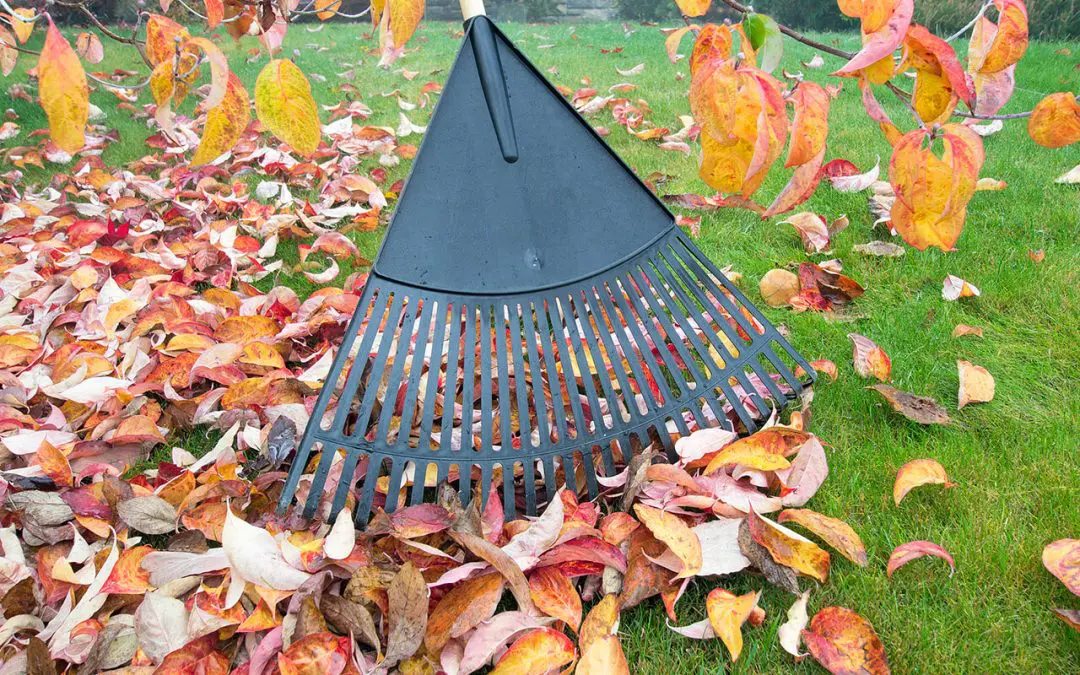
Leaf management is the fall lawn maintenance task that has the most direct consequence for the grass beneath it. A thin layer of leaves that gets mulched into the lawn with a mowing pass returns organic material to the soil and causes no harm. A thick, wet mat of leaves left on the lawn through the late fall and winter blocks sunlight, traps moisture, promotes fungal disease, and smothers the grass beneath it, producing dead patches. Mowing height in the final cuts of the season is the detail that most homeowners overlook. Grass left too long going into winter is susceptible to snow mold and matting that damages the crown of the grass plant. Grass cut too short loses the leaf area it needs to photosynthesize and store energy for spring. The appropriate final mowing height for most cool-season grasses is two to two and a half inches, slightly shorter than the summer mowing height, which protects the crown without removing the leaf area the plant needs.
Frequently Asked Questions (FAQs)
Do I need to aerate every year?
Not necessarily; frequency depends on soil type, foot traffic, and current compaction. Lawns on heavy clay soils or with significant traffic benefit from annual aeration. Sandier soils with lighter traffic may only need aeration every two to three years. A simple test is to push a screwdriver into the lawn; easy penetration to four inches means compaction isn’t urgent; resistance means fall lawn maintenance aeration is warranted.
Can I overseed without aerating as part of fall lawn maintenance?
Yes, but results are typically less effective. Seed broadcast without aeration competes with thatch for soil contact, and germination rates are significantly lower than seed dropped into aeration holes. For lawns with minimal thatch, overseeding alone can produce adequate results. For lawns with significant thatch buildup, aeration first is the fall lawn maintenance approach that produces meaningful improvement.
What grass types benefit most from fall lawn maintenance?
Cool-season grasses, like fescue, Kentucky bluegrass, and perennial ryegrass, benefit most because their active growth periods align with the fall conditions that make aeration, overseeding, and fertilization most effective. Warm-season grasses, like bermuda, zoysia, and St. Augustine, are entering dormancy in fall and respond differently. The core tasks should be timed to the specific grass type’s growth cycle rather than applied universally.
Does fall lawn maintenance include weed control?
Yes, fall is an effective time for broadleaf weed control because weeds are actively moving nutrients to their roots in preparation for winter, making them more receptive to herbicide uptake than in summer. Pre-emergent herbicide applications in early fall also address winter annual weeds that germinate in cool weather. Apply post-emergent herbicides before overseeding, as most require a waiting period before new seed can be sown without affecting germination.
Border Home and Property Inspections provides home inspection services to the midwest region of Alberta and Saskatchewan. Contact us to schedule an inspection.